Holiday Culinary Disasters

We all have seen the pictures of the perfect holiday meals.  The turkey is a perfect golden brown.  The side dishes all perfect. Perfect is usually not a reality.

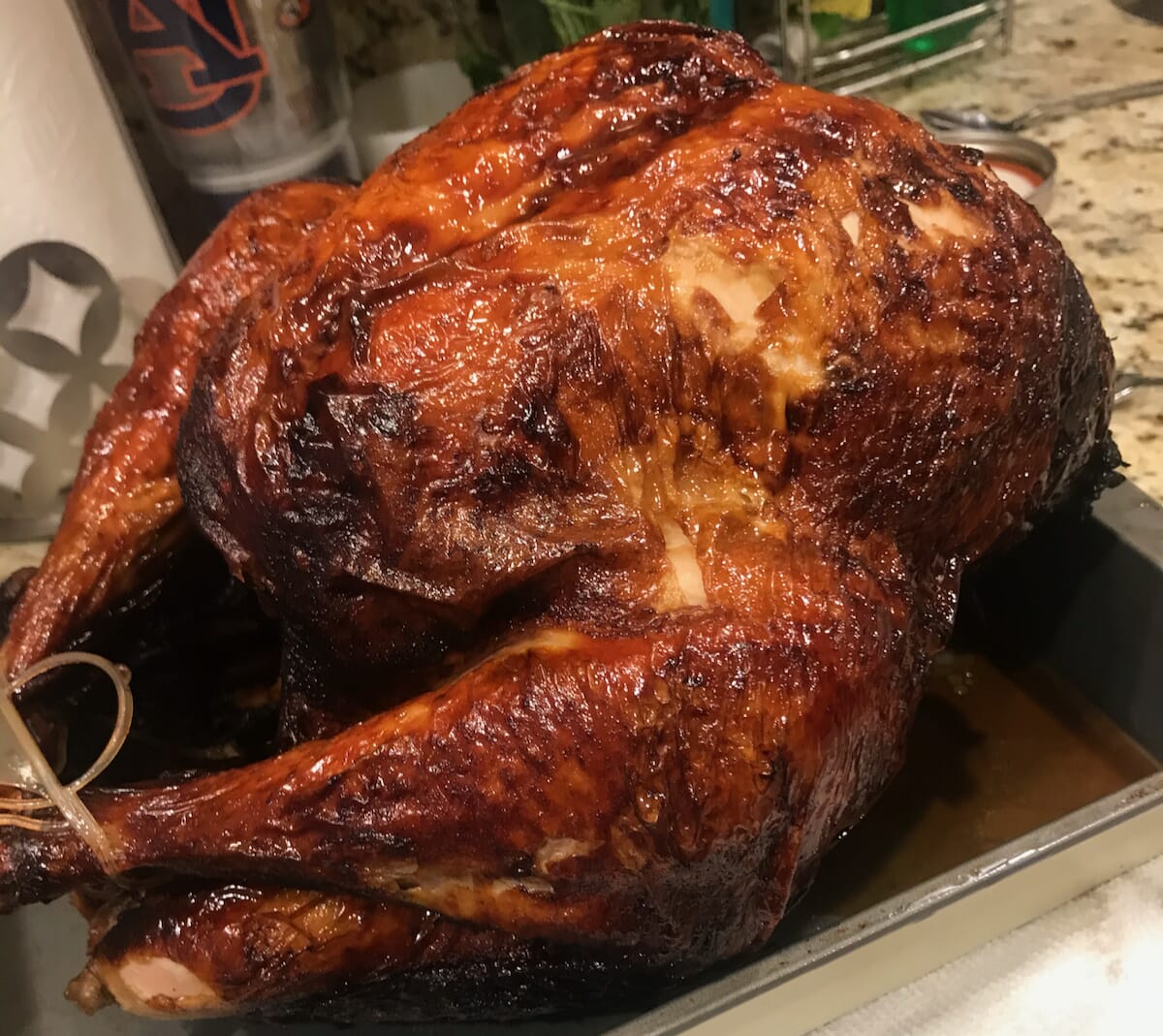
(The Fried Turkey was pretty near perfect)

Reality was that the dressing was overcooked. Reality was that you completely forgot two of the side dishes. Reality was that the ham got over charred.

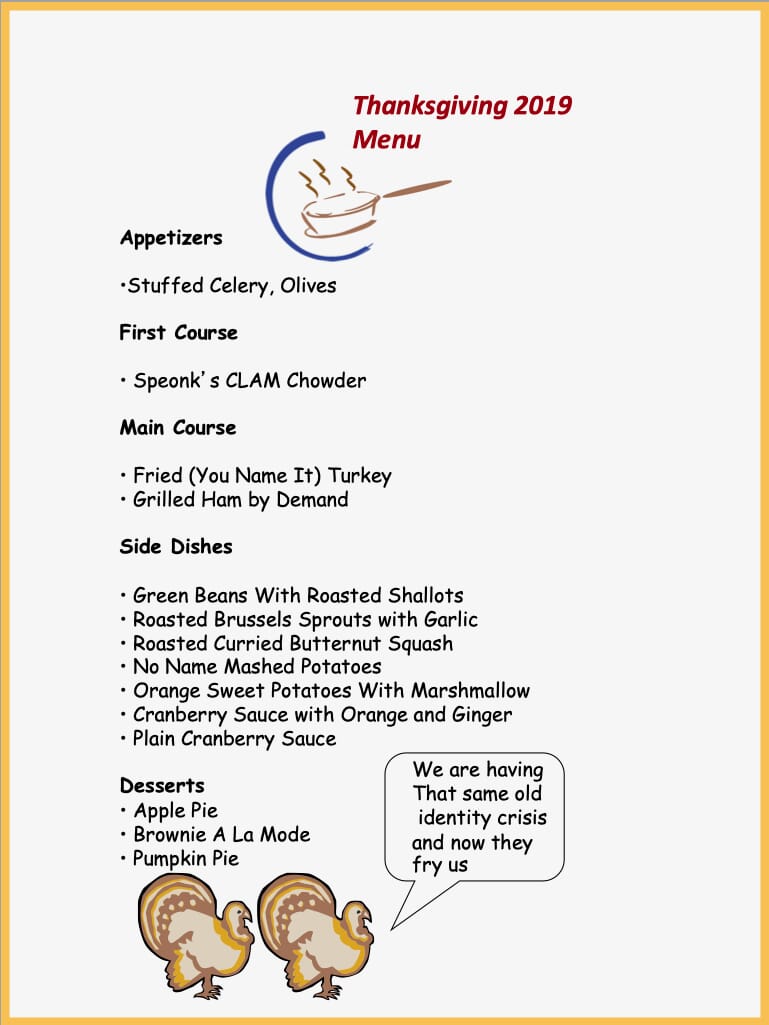
The cause of most of my disasters is the fact that I try to do too much. Every year I try to pare the Thanksgiving menu back. The problem is tradition and fact that everyone has a favorite. God forbid that you cut out someone’s favorite and completely ruin their holiday. This year I surveyed the usual suspects, for everyone that said do away with the sweet potatoes there were two that said sweet potatoes were their favorite.

(The extensive menu was the recipe for disaster)

THE DISASTERS AND WHY THEY OCCURRED

  1. The dressing was over cooked
  • The dressing I make is an homage to my father. He didn’t spend a lot of time in the kitchen, but every year he would make the stuffing. It was a process that started early in the morning, he always used the same pot and basically the same ingredients. It’s a fond memory and starting Thanksgiving Day making dressing is my tradition.
  • Why did the dressing get overcooked? The simple answer is that I forgot it in the oven. The truth is, I was trying to do too many things at one time.
  • The solution was adding some chicken stock to remoisten the dressing
  1. I forgot two side dishes
  • How can you be are cruising along thinking everything is in place 30 minutes before guests arrive and then realize you have forgotten two side dishes? Well, if you have 5 side dishes ready to go, forgetting 2 is explainable. Or is it?
  • The good news is that the Brussel Sprouts and Green Beans had been prepped the day before and just needed a quick sauté to be ready.
  1. The ham was over charred.
  • Why does this feel like an oxymoron? Why would you char a ham to begin with? The reality is that a disaster 15 years ago has become one of my signature dishes and the one item that if I cut from the Thanksgiving Menu I would get cut from the family.
  • This dish started years ago when my son Brian and second daughter Meagan who hate turkey, asked for a ham. The problem was that my one oven was being used for the turkey. The solution was to roast the ham in the Webber Grill in a cast iron skillet. The result was a ham covered with char. The solution was to trim the char. We wound up with a tasty/juicy ham that has become a fan favorite.
  • This year I cooked the ham early. Left it in the grill and then reheated it just before serving. The result was too much of a good thing. The solution was trimming a little more char that normal. The irony is that those pieces of char trimmings wind up being fought over. Adding new meaning to the saying: “One man’s trash is another man’s treasure”.


Perfect was not the reality. But, with preparation and a little creativity, the result was pretty tasty. And, next year I am going to simplify the menu

If you enjoyed this blog and similar other stories/supper club lessons follow me on Facebook and Twitter and subscribe to get future blogs at www.impromptufridaynights.com/blog and check out my book Impromptu Friday Nights a Guide to Supper Clubs. Published by Morgan James Publishing and available through most channels where books are sold.


  • Paul, Emma, Hadley, Jennifer
  • Susan, Dylan, Brian
  • Max, Ethan, Declan, Lauren

Frying A Turkey Is The Best…But!

A few years ago my daughter’s in-laws from Brooklyn NY came to Memphis for thanksgiving. To give them a taste of southern cuisine I decided to fry a turkey in addition to my conventionally roasted turkey. In effect we had a taste panel where our twenty guests got to try both a roasted and fried turkey. There was no question that the fried turkey tasted better. It was more savory and had a richer flavor. It gave new meaning to the saying: “you can fry anything and it will taste better”.

Fried turkeys are great, but frying is dangerous. Every year deep-fryer fires are responsible for five deaths, 60 injuries, the destruction of 900 homes, and more than $15-million in property damage, according to the National Fire Protection Association.

I had a neighbor who once almost burned down his house. The poor guy thought you had to have the oil boil before putting the turkey in. He was lucky he didn’t kill himself. He did however set his house on fire. The funny part of the story was that my buddy just happened to be wearing a tee shirt that said “Chicago  Fire Department”. When the local fire department got to the house my freind noticed one of the firemen looking at his shirt quizzically. My buddy told him the shirt was a gift. To which the fireman responded: “I figured”.

With all this said, there are six keys to safely frying a turke

  1. Get a smaller turkey that fits in your fryer

A turkey in the 12 to 15 pound range will work well. Most turkey fryers will fit a turkey of less than 15 pounds. Larger turkeys increase the chances of oil overflow.  The smaller turkey also cooks quicker and more evenly. If you are having larger crowd you may need to fry more than one turkey. The good news is that it only takes about 35 to 45 minutes to fry a turkey so cooking two should be no problem.2

2. Make sure your turkey is fully defrosted and brought to room temperature

If you want a real disaster try putting a frozen turkey in hot oil. There are some hilarious videos on the internet, but if it happens in real life the explosion isn’t funny at all. I like to use a fresh turkey and even with that I will take the a turkey out of the refrigerator for a couple of hours prior to frying to make sure it is at room temperature

3. Pre-measure how much oil to put in your fryer

I like to place my turkey in the cold fryer before cooking. Then I fill the fryer wiith water to get the turkey fully covered. You then pull the turkey out and mark how much water is in the fryer. Then empty the water out. Fully dry the pot and fill the fryer with oil up to your mark

4. Fry your turkey outside away from anything that will catch on fire

This seems like an obvious one, but you can’t be too careful. Again there are stories where people have fried a turkey inside or even on a wooden deck that just don’t end well

5. Use an  fry oil thermometer and take precaution when lowering the turkey into the oil

Heat your oil to 250 degrees and then slowly lower it in. The biggest risk is the first time you lower the turkey into the oil. The risk is the oil bubbling over and igniting with the flame. I use the a hook unit that comes with the fryer and wearing heat resistant cooking gloves and a large sturdy fork to lower the bird in without getting burned. Once the turkey is in, I then bring the oil temperature up to 350 degrees and cook for 35 minutes

6. Use an instant read thermometer to make sure the bird is done.

After the bird has cooked for 35 minutes I pull it out with the hook, gloves and fork. Then using an instant read thermometer I make sure the internal temp is 155 degrees. After the turkey is out of the oil it will continue to cook and should reach 165 degrees. The bird should rest for at least 20 to 30 minutes before carving.

In the end fried turkey is better and with these 6 keys it can be done safely.

If you enjoyed this blog and similar other stories/supper club lessons follow me on Facebook and Twitter and subscribe to get future blogs at www.impromptufridaynights.com/blog and check out my book Impromptu Friday Nights a Guide to Supper Clubs. Published by Morgan James Publishing and available through most channels where books are sold.



French Fries – A War Story

The culinary history of the United States has been greatly impacted by what soldiers brought back from war. From WWI the soldiers brought back French fries. From WWII they brought back pizza (and many other items). Funny how they didn’t bring back real Kimchi from Korea(?).

My grandfather fought in the First World War. I remember his story about he and his buddies getting potatoes and bringing them to a French farmhouse where the farmer’s wife would make them Pommes Frites. Gramps brought back a love for French Fries from the war. Unfortunately, he didn’t bring back his leg. Gramps got shot in the leg during the battle for the Argonne forest. He told the story about the wound not being so bad, but because of triage, he didn’t get treatment right away and the wound led to gangrene and eventually the loss of his leg.

My Grandmother and Grandfather at their engagement party before Gramps left for World War I

Gramps was a hero. He received the Purple Heart, but his biggest accomplishment was how he dealt with adversity and went on to to live a full life. Gramps had gotten engaged to my grandmother before the war. After losing his leg he wrote, telling her that the engagement was off, as he wasn’t the same man. Of course, she wrote back telling him it didn’t matter. When I was in college, I went to visit Gramps and he took me to the Historic Richmond Town site on Staten Island NY. My grandmother’s house is part of the site. We sat in the car in front of the house and Gramps told me about how when he came home from the war, he arrived on Staten Island late at night. He walked across the island on one leg with crutches and arrived at the house at 4 in the morning and sat quietly on the porch afraid to wake anyone and afraid that the family wouldn’t accept him. I cry every time I tell this story. Gramps will always be my hero.

My Grandmother’s Home where my gramps was afraid they wouldn’t welcome him as a wounded veteran

My grandfather’s Purse Heart, Helmet and Dog Tags from World War I

Ironically, French fries became a favorite of our family growing up. My mom made French fries in a small fryer on the stove top for years. There were two problems:

  1. The fries were never crispy enough.
  2. She could never make enough fries to keep a family of five happy.

The key to making the fries crispy is to do what the French farmers wife did. The French know that to get a crispy fry you need to cook them twice. The answer is to precook the fries and then finish them off with a second cooking in really hot oil (over 300 degrees). This also helps my mother’s second problem because when you precook the fries it only takes a few minutes in hot oil to get them to the perfect crispiness and you can churn out a targeted quantity pretty quick. It is no coincidence that precooking the fries is the key to McDonalds success with fries. I’ll never forget my first trip to France and having fries and thinking: “These are even better than McDonalds!

If you enjoyed this blog and similar other stories/supper club lessons follow me on Facebook and Twitter and subscribe to get future blogs at www.impromptufridaynights.com/blog and check out my book Impromptu Friday Nights a Guide to Supper Clubs. Published by Morgan James Publishing and available through most channels where books are sold.